

Rhenium-SCT Patient Information
Rhenium-SCT Patient Information
This guide provides information about preparing for Rhenium-SCT, what to expect during treatment, recovery and follow-up care, and answers to some common questions.
Or email admin@dermatologists.com.au
How does it work?
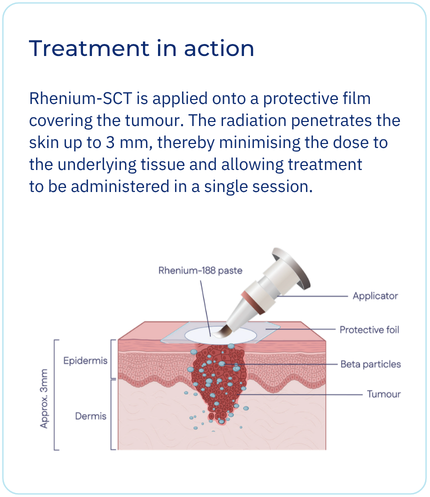
Rhenium-SCT utilises radiation in the form of a paste that is applied over the area to be treated. The paste is left in place for a carefully calculated length of time. You will not notice any changes in the treatment area during this time. You can go home after the treatment is finished.
The Rhenium-SCT paste emits radiation that destroys target cancer cells. The radiation dose only penetrates the skin up to 3 mm so the underlying tissue is not affected.
The paste used in Rhenium-SCT treatment does not directly touch your skin. You will not be radioactive after treatment and there is no risk to anyone else that you come into contact with.
Precise
Accurate dosing that spares healthy tissue.

Single treatment
For the vast majority of patients.

Fast
Treatment usually takes between 30 and 180 minutes.

Painless
No pain was reported during the procedure in clinical trials.

Non-invasive
No cut or break in the skin is created.

No scarring or deformity
The skin may look a little lighter after healing.
Rhenium-SCT treatment considerations
Rhenium-SCT involves exposure to radiation. The radiation doesn’t penetrate deeper layers of the skin and the application is designed to spare healthy tissue around the tumour.
The most common side effects are redness, scabbing, itching and burning which can occur after the treatment, as the area heals.
The healing process
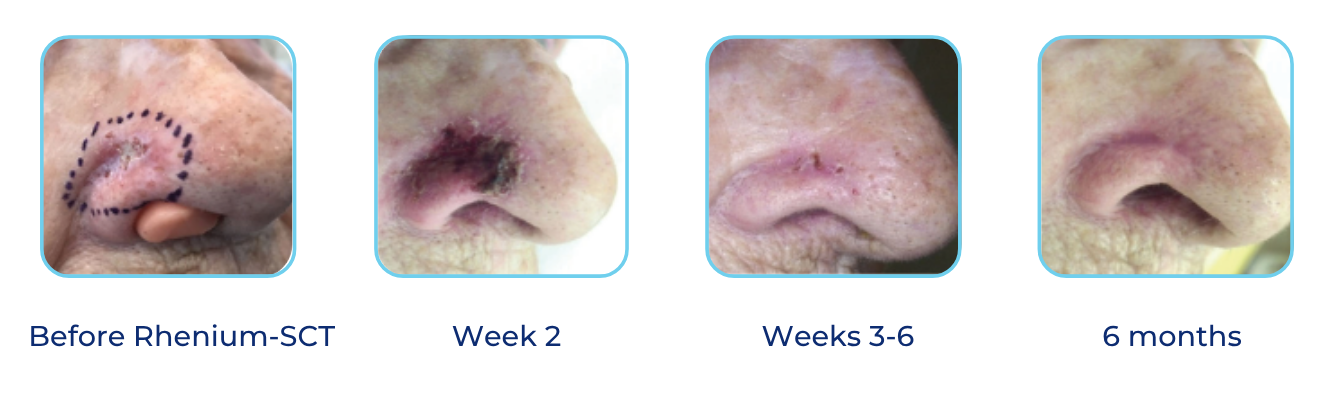
Healing typically occurs 30–90 days after treatment with Rhenium-SCT, but may take up to 180 days depending on factors such as the size, depth and location of the tumour and your general health.
Patient experience with Rhenium-SCT
Healing typically occurs 30–90 days after treatment with Rhenium-SCT, but may take up to 180 days depending on factors such as the size, depth and location of the tumour and your general health.
-
At around 2 weeks, you may experience some scabbing or itching. The tumour may look worse, but this is part of the normal healing process.
-
Weeks 3 to 6 the redness fades and wound healing continues.
-
At 6 months, the healing process is finished. The treated area may appear a bit lighter but with no scarring or deformity.
Preparing for treatment with Rhenium-SCT
Your medical professional will discuss the different treatment options with you, including why they are recommending Rhenium-SCT in your case. This will give you the opportunity to ask any questions you may have about your treatment options.
Your medical professional will then perform the following assessments prior to your treatment with Rhenium-SCT.
• Confirmation of diagnosis
To determine whether treatment with Rhenium-SCT is right for you, your medical professional will perform a punch biopsy. This involves taking a small sample of tissue with a small circular blade (called a punch) so that a pathologist can examine it. The procedure is performed under a local anaesthetic and usually takes 10 to 15 minutes.
A punch biopsy is required to confirm the BCC or SCC diagnosis and to determine how deep the tumour is. Tumours must be less than 3 mm deep to be suitable for Rhenium-SCT.
The punch biopsy results and photographs of the lesion will then be included with your referral.
• Referral for treatment
Following these assessments, you will be referred to a licensed nuclear medicine physician or radiation oncologist. At this appointment, suitability of the tumour for Rhenium-SCT will be discussed and they will explain what is involved in the procedure so that you can provide your consent.
• Margin assessment
Your medical professional will assess you and mark the treatment area. This will include the tumour as well as some nearby normal-looking tissue (known as the margin). Including a margin helps ensure that all the cancer cells are removed. The area calculation will be used to calculate your Rhenium-SCT treatment.
What to expect during Rhenium-SCT treatment
Treatment usually takes between 30 and 180 minutes. Only one treatment is required in most cases.
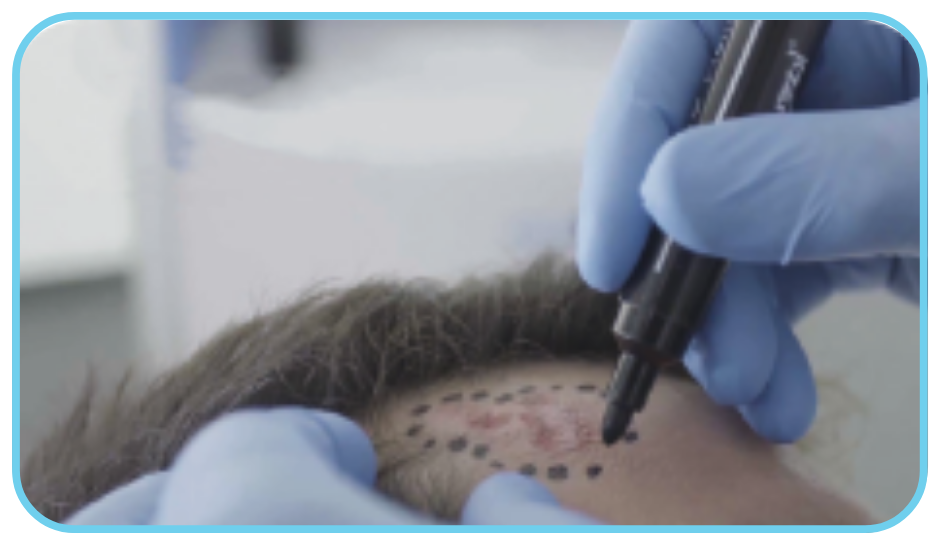
Marking the area
The medical professional marks the area to be treated.
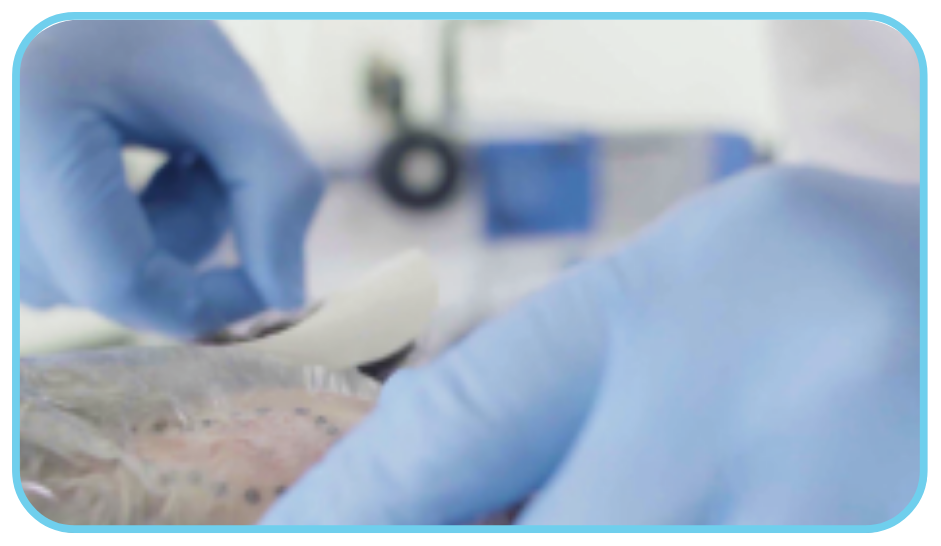
Treatment
The medical professional covers the area in an adhesive film before applying the Rhenium-SCT paste.
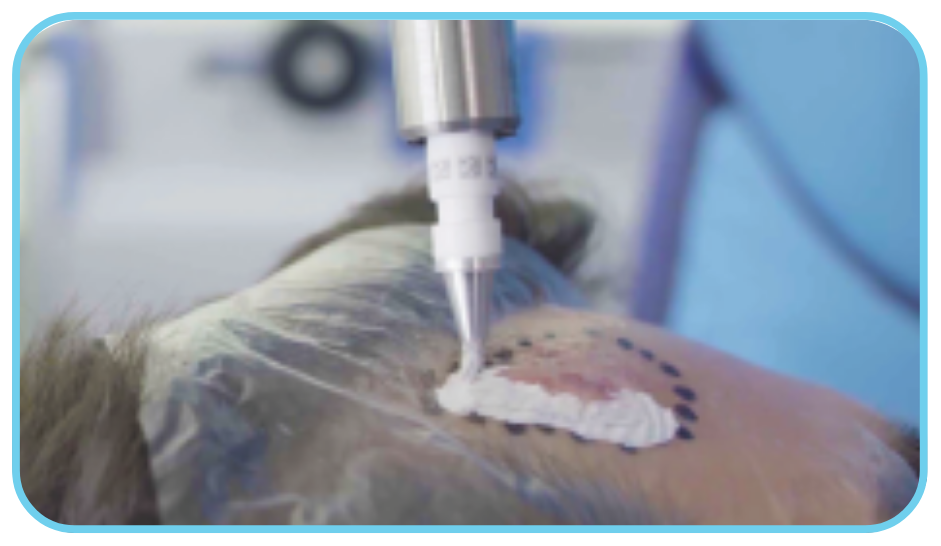
End of treatment
After the calculated treatment time has elapsed, the film is removed and you can return home.
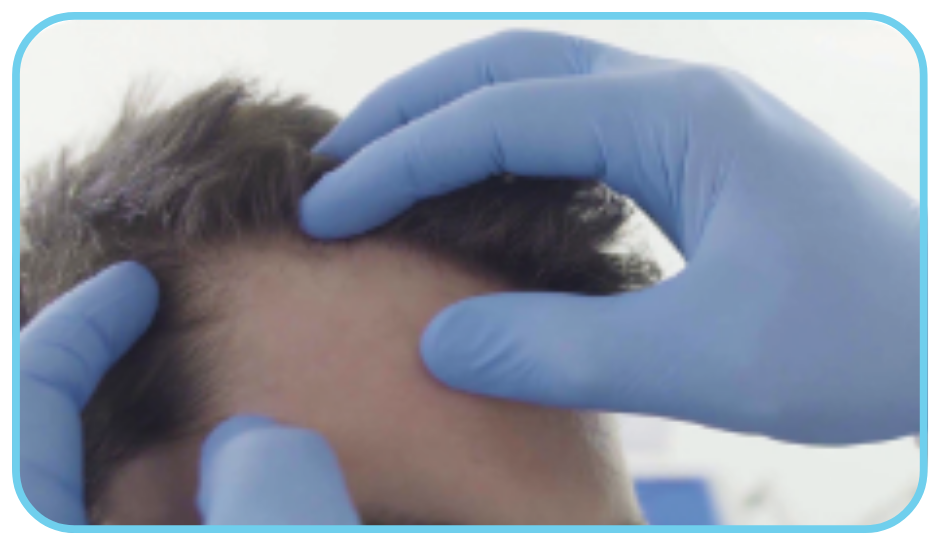
Follow-up
Your medical professional will provide information on how to care for your skin post-treatment, as well as when to attend follow-up appointments.
What to expect following Rhenium-SCT treatment
Post-treatment care and follow-up
Your medical professional will schedule follow-up appointments either with themselves or with your referring clinician to ensure the area is healing appropriately. It is important that you attend all scheduled follow-up appointments so your medical professional can monitor your progress.
It is important to keep the area clean to ensure the best outcome. The treatment area may get wet during bathing but should be carefully dried. You may wear a gauze or bandage to protect the area from getting knocked or becoming dirty during certain activities, but wherever possible the treatment area should be allowed to breathe.
It is expected that a scab will form over the treatment area, which is often larger than the original tumour. The scab is an important part of the healing process to allow the healthy tissue underneath to be restored. It is important not to disturb or pick the scab – this will shed naturally once healing is complete. Do not use cosmetic products or lotions on the treatment area unless directed by your treating clinician.
Managing side effects
The most common side effects with Rhenium-SCT are redness, scabbing, itching and burning. These may occur in the days and weeks following treatment.
Skin reactions usually begin within a week and will often worsen over the following 2–3 weeks. These are part of the healing process. Your follow-up appointments will commence during this period so that your medical professional can monitor the area and answer any questions or concerns you may have.
If the area becomes painful, infected or restricts your daily activities, or if the healing time exceeds 60 days or deteriorates after it has healed, call your medical professional immediately to discuss further and/or book an appointment to see them.
Frequently asked questions
Does treatment with Rhenium-SCT hurt?
No pain was reported during the procedure in clinical trials.
However, Rhenium-SCT can cause redness, scabbing, itching and burning in the days and weeks following treatment. Skin reactions usually begin within a week and will often worsen over the following 2–3 weeks.
Your follow-up appointments will commence during this period so that your medical professional can monitor the area and answer any questions you may have.
Is Rhenium-SCT safe?
Rhenium-SCT administers radiation to the lesion and penetrates the skin up to 3 mm. The paste used in Rhenium-SCT doesn’t penetrate deeper layers of the skin, reducing dose to healthy tissue around the tumour.
Possible treatment-induced toxicity include:
- Redness of skin
- Hypopigmentation
- Inflammation
- Bleeding or vascular complications
- Local infections or fever
- Skin necrosis/scars
- Hair loss at the treatment area
- Local tumours at the treatment area as a long-term side effect of radiation therapy
- Radiation ulcer
How long will the Rhenium-SCT treatment take?
Treatment usually takes between 30 and 180 minutes. After the treatment is finished, you can go back to your usual activities immediately.
Will I be radioactive after treatment?
No. The radioactive paste used in Rhenium-SCT treatment does not directly touch your skin. You will not be radioactive after treatment and there is no risk to anyone else that you come into contact with.
Will I need to take any time off from work to recover after treatment?
In general, there is no special aftercare needed. You can return to work as soon as you feel comfortable to do so.
What happens after treatment with Rhenium-SCT?
It is important to keep the area clean and dry to ensure the best outcomes. It is expected that a scab will form over the treatment area. Make sure you do not to disturb or pick the scab – this will be shed naturally once healing is complete.
Do not use cosmetic products or lotions on the treatment area unless directed by your medical professional. Your medical professional will schedule follow-up appointments either with themselves or with your referring clinician to ensure the area is healing appropriately. It is important that you attend all scheduled follow-up appointments so your medical professional can monitor your progress.
How much does treatment with Rhenium-SCT typically cost?
There are a number of factors which determine the out of pocket cost of treatment, including tumour size. This will be discussed with you by your medical professional prior to treatment.

Book a Consultation
Speak with our team about your treatment options and whether Rhenium-SCT may be appropriate for your individual circumstances.