Scar Treatment
Traumatic scars, surgical scars and injury-related scars.
What are scars?
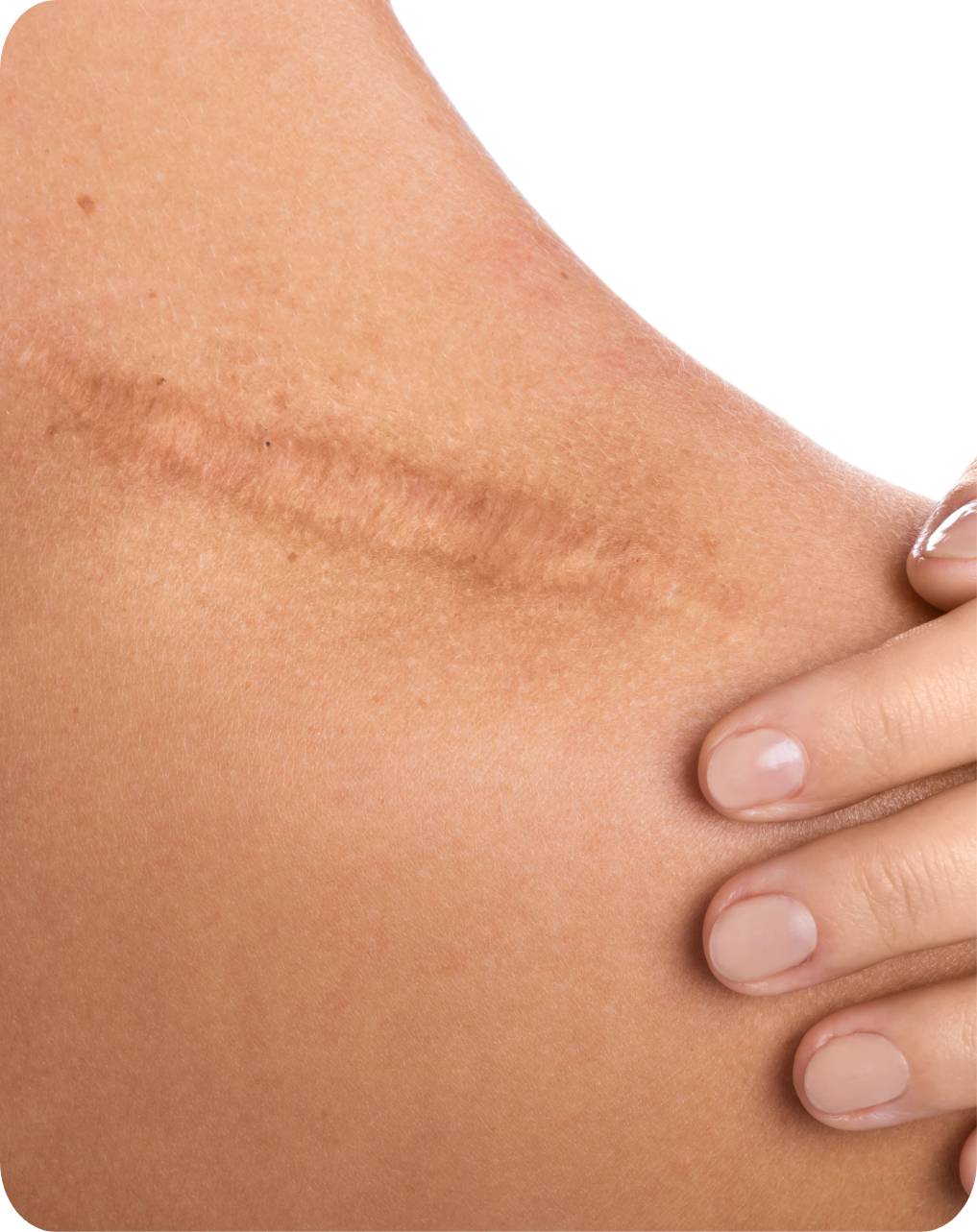
A scar is an area of fibrous tissue that forms when the skin repairs itself after damage. This healing process involves the production of collagen, which helps strengthen the skin but can sometimes result in changes to the texture, colour or appearance of the affected area.
Scars can develop after many different types of skin injury, including surgical procedures, accidents, burns, cuts, trauma or inflammatory skin conditions. The appearance of a scar can depend on several factors, including the depth and location of the injury, genetics, skin type and how the wound heals over time.
While some scars naturally become less noticeable as they mature, others may remain raised, indented, discoloured or uneven in texture. A consultation can help determine which treatment options may be suitable.
What causes scars?
Scars develop as part of the body’s natural healing response following damage to the skin. Common causes of scars include:
• Surgery
Surgical procedures intentionally create an incision in the skin, which can result in a scar as the body repairs the area. Surgical scars can vary depending on the procedure, location and individual healing response.
• Injury or trauma
Cuts, accidents, falls, burns and other injuries can damage the deeper layers of the skin and may result in visible scarring as the area heals.
• Burns
Burn injuries can affect different layers of the skin and may result in changes to texture, colour and flexibility depending on the severity of the injury.
• Inflammation or skin conditions
Inflammation within the skin can sometimes affect the healing process and contribute to changes in skin texture or pigmentation.
• Individual healing response
Factors such as genetics, age, skin type and how the wound heals can influence whether a scar becomes raised, thickened, stretched or more noticeable.
What can scars look like?
Raised scars (Hypertrophic scars)
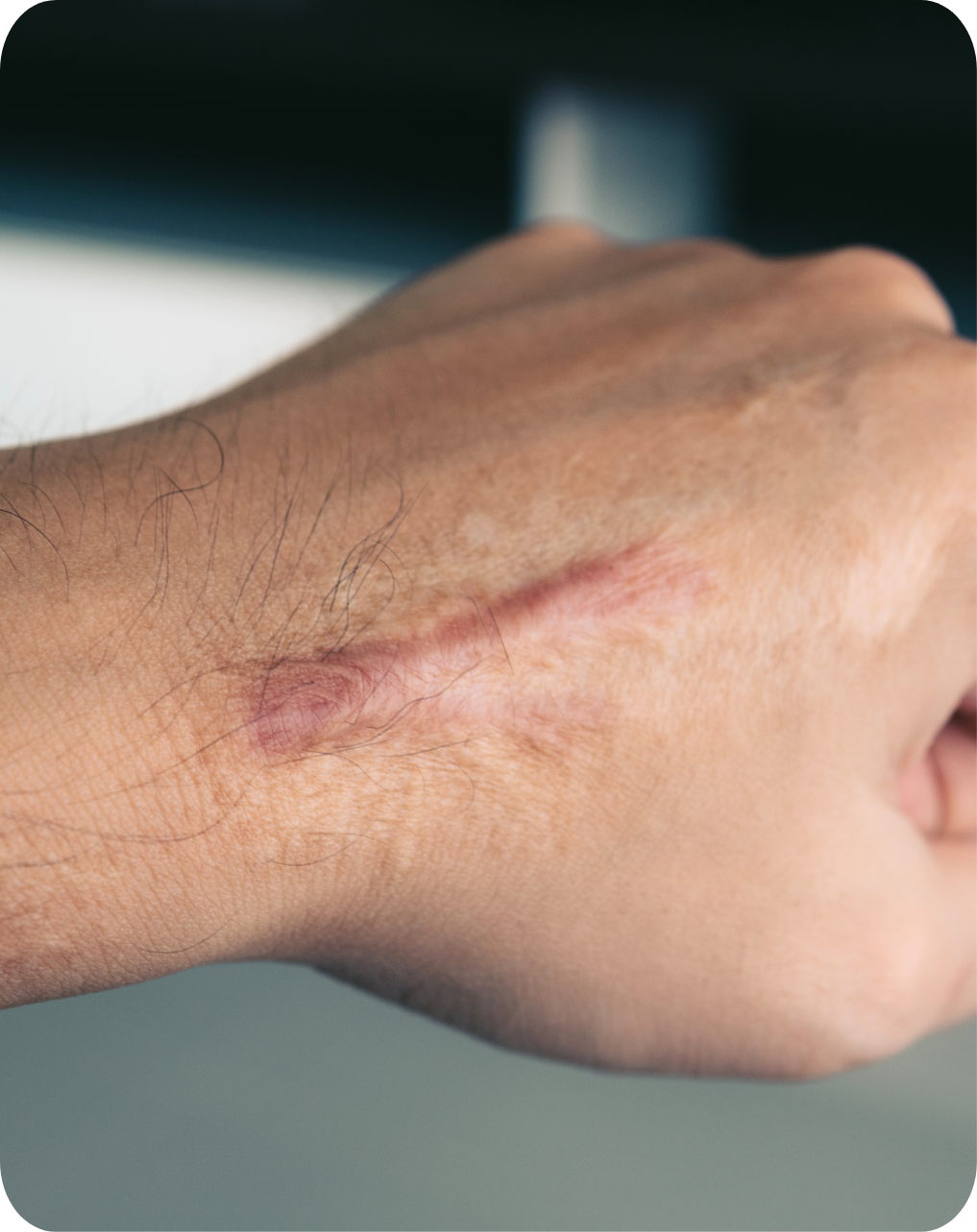
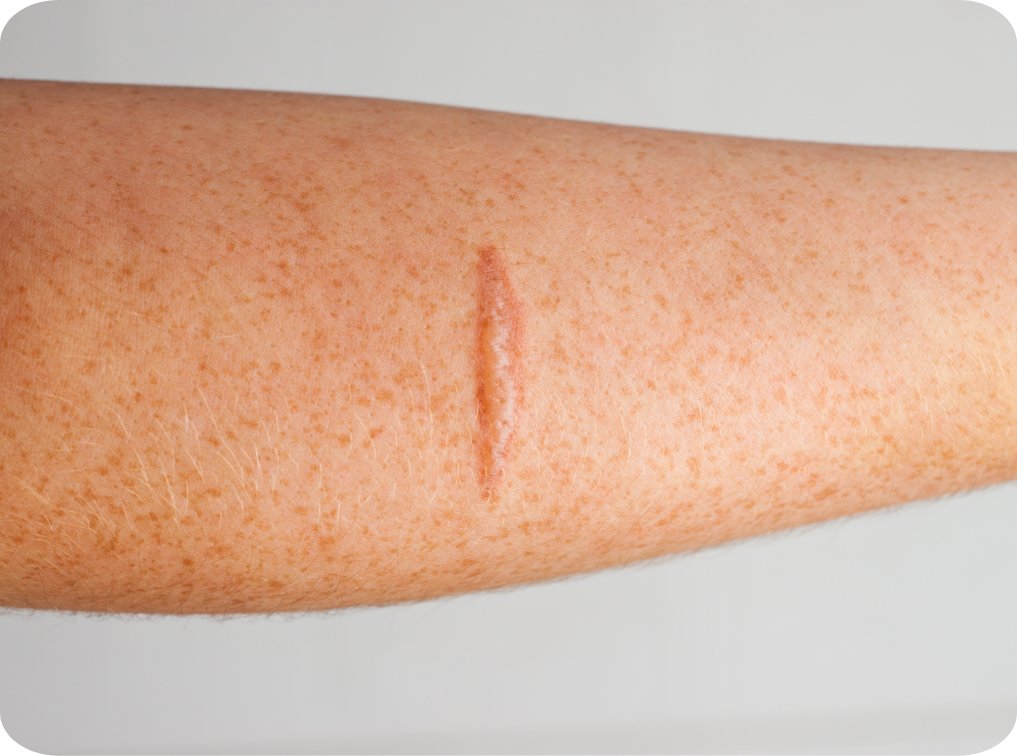
Hypertrophic scars occur when excess collagen is produced during the healing process, causing the scar tissue to become raised above the surrounding skin.
These scars typically remain within the original area of injury and may become thicker, firmer or more noticeable over time.
Commonly associated with:
- Surgical scars
- Injuries or trauma
- Burns
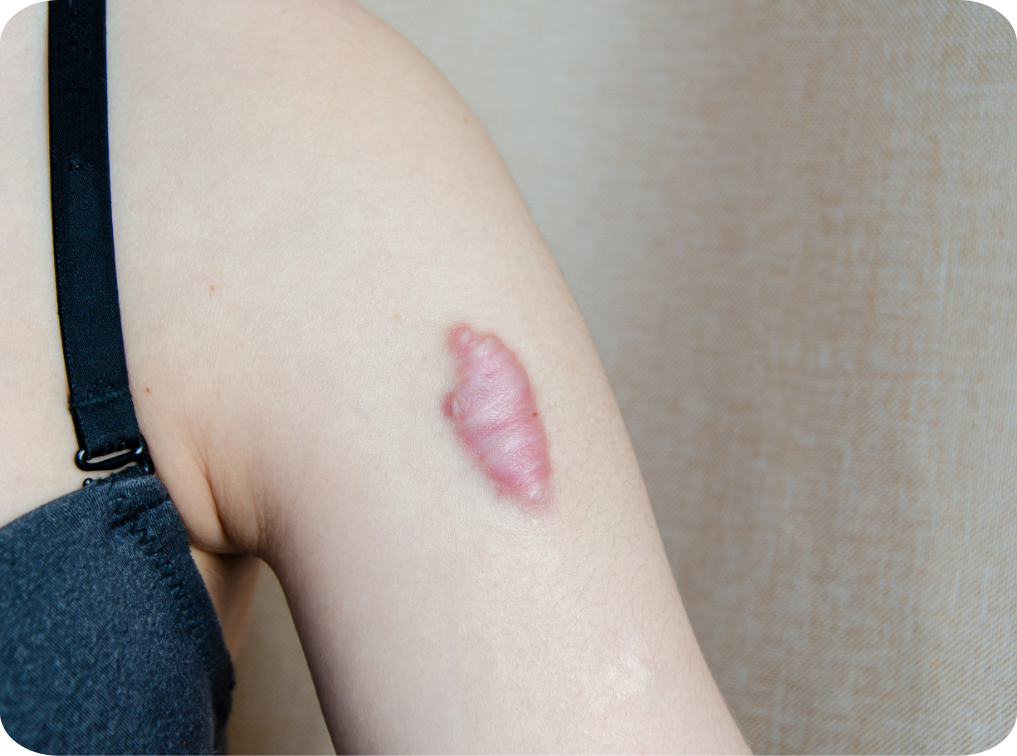
Keloid scars
Keloid scars are a type of raised scar where excess scar tissue extends beyond the original area of skin injury. Keloids can continue to grow beyond the boundaries of the initial wound and may cause symptoms such as itchiness, tenderness or discomfort.
Commonly associated with:
- Genetics and individual healing response
- Areas such as the chest, shoulders, upper back and earlobes
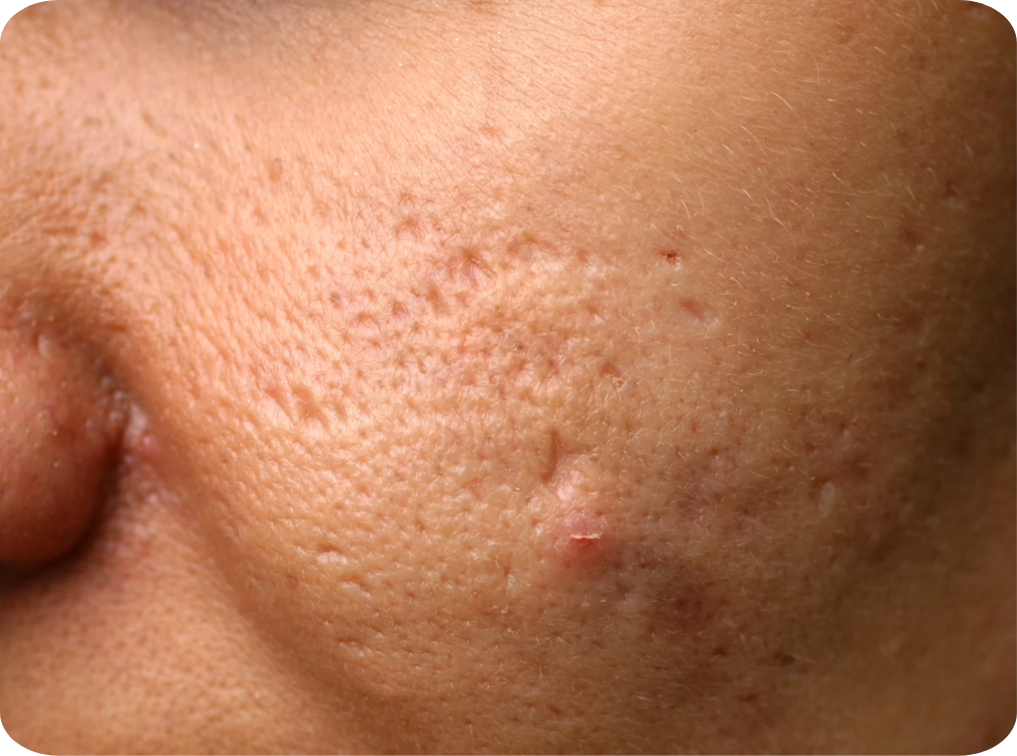
Atrophic scars
Atrophic scars appear as depressions or indentations in the skin where the tissue has not regenerated evenly during the healing process. These scars can create changes in skin texture and may appear as areas of uneven skin surface.
Commonly associated with:
- Certain injuries or trauma
- Inflammatory skin conditions
- Acne scarring
Are keloid scars and hypertrophic scars the same?
Keloid scars and hypertrophic scars are both types of raised scars that occur due to an overproduction of collagen during the skin’s healing process. While they may look similar, they are not the same.
The main difference is how the scar tissue develops in relation to the original injury. Hypertrophic scars remain within the boundaries of the original wound and may become less noticeable over time as the scar matures. Keloid scars extend beyond the original area of injury and can continue to grow over time. They may also cause symptoms such as itchiness, tenderness or discomfort.
Understanding whether a scar is hypertrophic or keloid is an important step in determining the most appropriate treatment approach.
When should you seek treatment for scars?
What treatment options are available for scars?
Scar treatment requires a personalised approach, as different scar types respond to different treatment methods. The most suitable treatment plan depends on factors including the type of scar, its age, location, texture and your individual skin characteristics.
At Perth Cosmetic Dermatology, treatment options may include laser-based therapies and supportive skincare approaches designed to improve the appearance of scars and surrounding skin.
Q-switched Nd:YAG Laser
Ideal for treating pigmentation concerns associated with certain scars.
Some scars may appear darker or more pigmented compared with the surrounding skin due to changes that occur during the healing process. Q-switched Nd:YAG uses targeted laser energy to address pigment within the skin. Depending on the type of pigmentation present and your individual skin characteristics, this treatment may be considered as part of a personalised approach to improve uneven skin tone associated with scarring.
Vascular Laser Treatment
Ideal for treating redness associated with certain scars.
Some scars may remain red or contain visible blood vessels due to changes during the healing process. Vascular laser treatments like the Excel® V laser use targeted wavelengths of light that are absorbed by blood vessels within the skin. This may help reduce the appearance of redness associated with certain scars and create a more even-looking appearance.
Skin Needling
Ideal for supporting collagen production and improving skin texture.
Skin needling uses fine needles to create controlled micro-injuries within the skin, stimulating the body’s natural collagen production response. Depending on the type and appearance of a scar, skin needling may be considered as part of a treatment plan to support improvements in skin texture and overall skin quality.
The treatments above represent some of the options available for scar management. During your consultation, our team will assess your scar and discuss the most appropriate treatment options based on your individual skin and treatment goals.
Discover Scar Treatment Options
Book a consultation with our team at Perth Cosmetic Dermatology to have your scar professionally assessed and receive a personalised treatment plan tailored to your skin concerns.
WHERE TO FIND US
Hollywood Medical Centre, Suite 60/85 Monash Avenue Nedlands, Western Australia 6009
Opening Hours: Tuesday – Friday | 9am – 4pm
P: 08 6166 3704
E: admin@cosmeticderm.com.au
Enter through the front door and walk straight ahead to the elevators. Take the elevators up to Level 2. When you exit the elevators, turn left and follow the corridor around the corner (we are located along the corridor).