Keratosis Pilaris
Small, rough bumps on the skin that can often be improved with personalised treatment approaches.
What is keratosis pilaris?
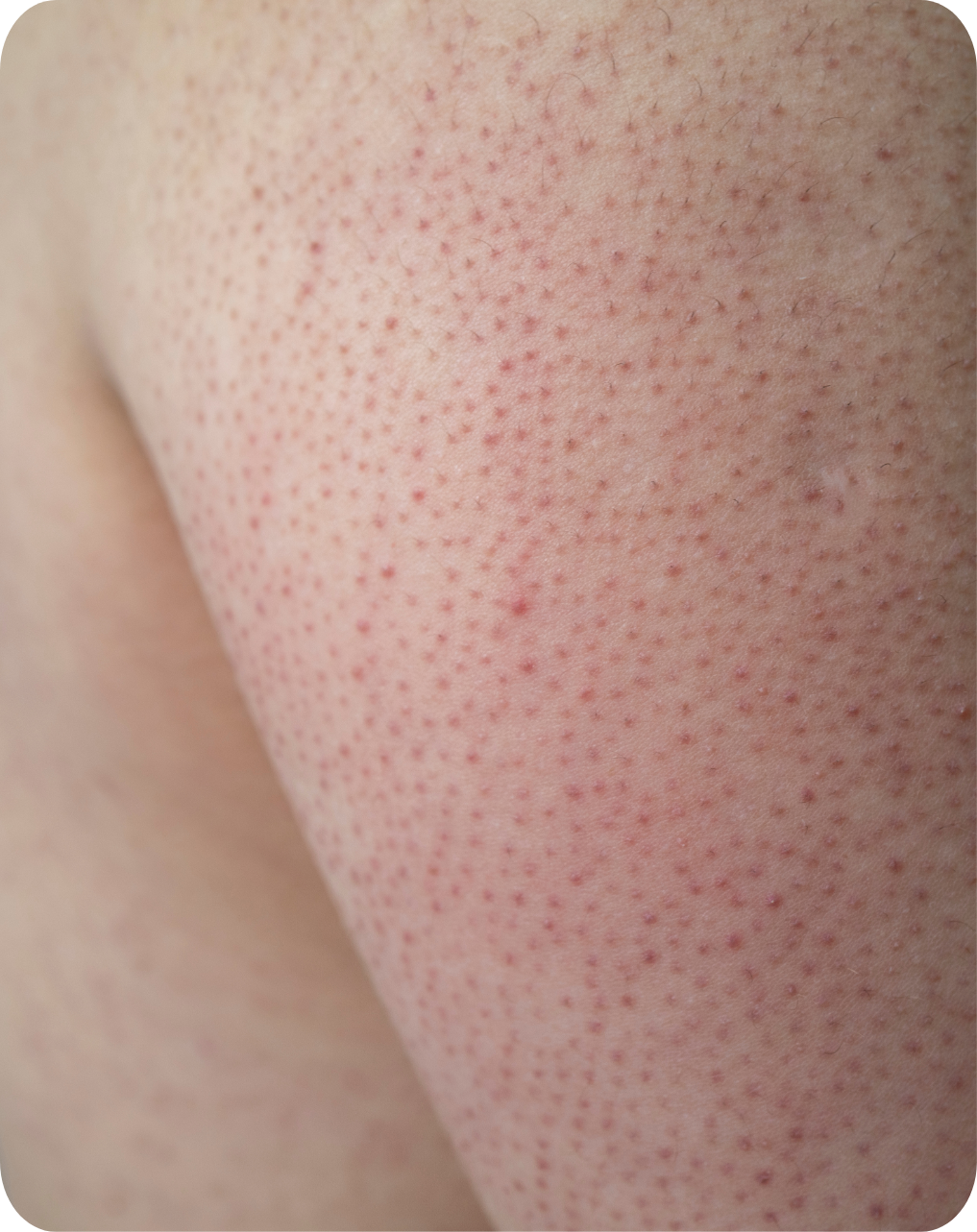
Keratosis pilaris is a common skin condition that occurs when keratin, a protein naturally found in the skin, builds up and blocks the openings of hair follicles.
This build-up creates small, raised bumps on the skin that may feel rough or uneven to touch. The bumps can appear skin-coloured, red, pink or darker than the surrounding skin depending on your individual skin type and the level of inflammation present.
Keratosis pilaris is not contagious and is not caused by poor hygiene. It is often influenced by genetics and skin characteristics, and many people experience periods where it improves or becomes more noticeable.
Although there is no permanent cure for keratosis pilaris, appropriate skincare and treatment approaches can help improve the appearance and texture of affected areas.
What causes keratosis pilaris?
Keratosis pilaris develops when excess keratin accumulates around hair follicles, creating small plugs that cause the characteristic rough bumps.
Factors that may contribute to keratosis pilaris include:
• Genetics
Keratosis pilaris often runs in families, meaning some people may have a greater tendency to develop the condition due to inherited skin characteristics.
• Dry skin
Dry skin can make keratosis pilaris more noticeable, as reduced moisture levels can contribute to roughness and uneven skin texture.
• Skin barrier changes
When the skin barrier is not functioning optimally, the skin may become more prone to dryness, irritation and rough texture.
• Individual skin characteristics
Factors including skin type, age and environmental conditions can influence how noticeable keratosis pilaris appears.
What does keratosis pilaris look like?
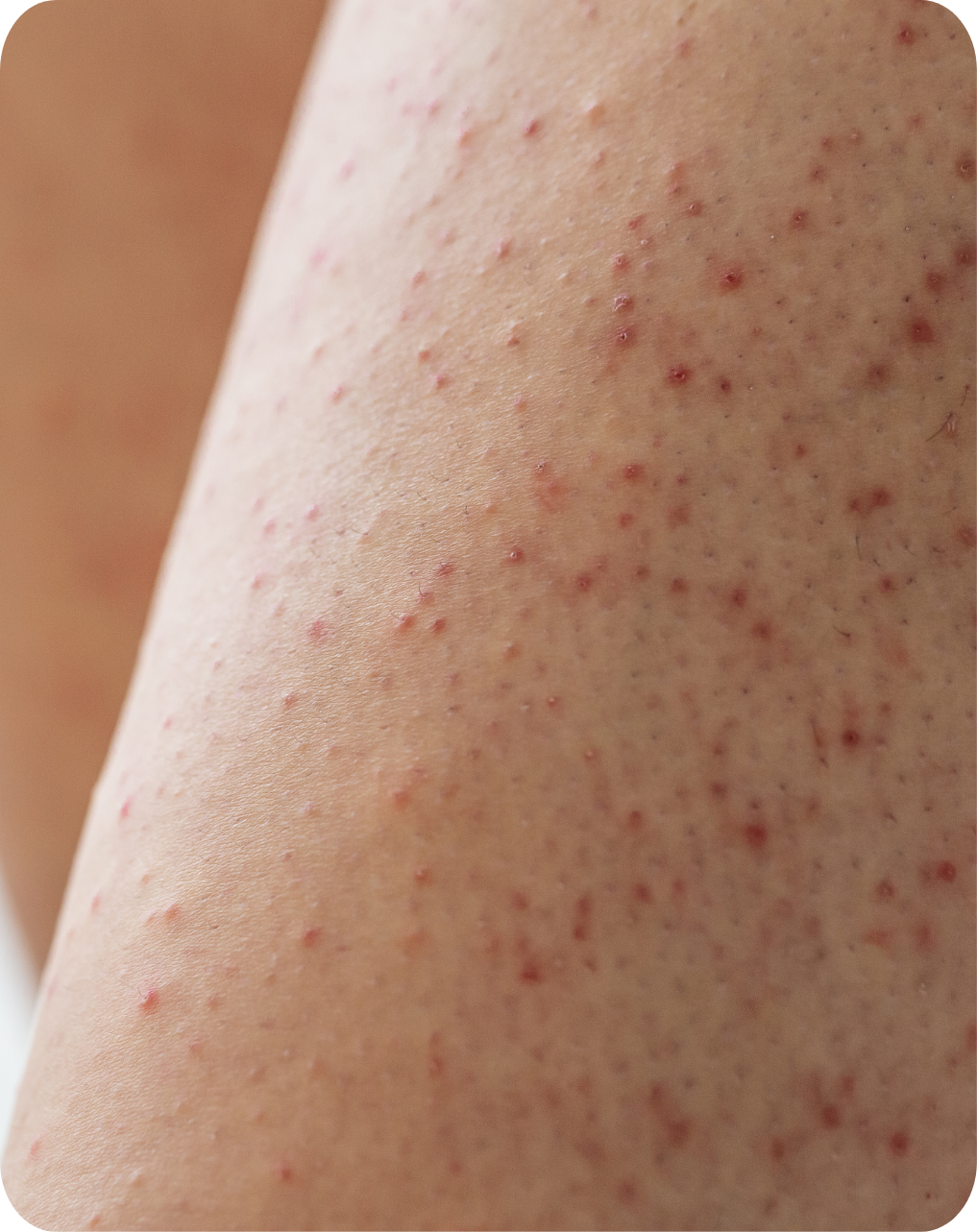
Keratosis pilaris can appear differently depending on your skin type and the severity of the condition.
Common features include:
- Small, rough bumps – Tiny raised bumps that may feel like sandpaper, commonly appearing on the upper arms, thighs, buttocks, cheeks or forearms.
- Red or pink bumps – Redness may occur around the bumps due to inflammation around the hair follicles.
- Uneven skin tone – Some people may develop darker marks or pigmentation changes after inflammation.
- Rough or dry texture – Affected areas may feel bumpy, dry or uneven compared with surrounding skin.
When should you seek treatment for keratosis pilaris?
What treatment options are available for keratosis pilaris?
Keratosis pilaris treatment focuses on improving skin texture, reducing roughness and managing associated redness or pigmentation changes.
The most suitable treatment approach depends on factors including your skin type, the appearance of your keratosis pilaris, the areas affected and your individual skin goals. At Perth Cosmetic Dermatology, treatment options may include personalised skincare recommendations and advanced skin treatments designed to support smoother looking skin.
Medical-grade Skincare
Ideal for improving skin texture and supporting ongoing management.
Skincare plays an important role in managing keratosis pilaris by helping to soften rough skin, improve hydration and reduce the build-up of keratin around hair follicles.
Products containing ingredients such as exfoliating acids, moisturising agents and barrier-supporting ingredients may be recommended depending on your individual skin needs. A tailored skincare plan can help maintain improvements and support long-term skin health.
Skin Peels
Ideal for improving rough skin texture and promoting smoother-looking skin.
Clinical skin peels use carefully selected ingredients to exfoliate the outer layers of the skin and encourage smoother skin texture.
Depending on your skin concerns and sensitivity, a personalised peel treatment may help improve roughness and uneven texture associated with keratosis pilaris.
Discover Keratosis Pilaris Treatment Options
Book a consultation today to discuss your keratosis pilaris concerns and explore suitable treatment options for your skin.
WHERE TO FIND US
Hollywood Medical Centre, Suite 60/85 Monash Avenue Nedlands, Western Australia 6009
Opening Hours: Tuesday – Friday | 9am – 4pm
P: 08 6166 3704
E: admin@cosmeticderm.com.au
Enter through the front door and walk straight ahead to the elevators. Take the elevators up to Level 2. When you exit the elevators, turn left and follow the corridor around the corner (we are located along the corridor).